Barking Rugby Football Club · used with permission
Community project
Barking Rugby Club
Supporting a rugby club that has long looked beyond the touchline — using sport, schools, reading and community programmes to create wider opportunities.
- Our support
- Community support for grassroots rugby
- Period
- Ongoing
- Project website
- Visit the project website ↗
A rugby club can be judged by results on a Saturday afternoon. A community club deserves a wider test: who does it reach, what opportunities does it create, and what happens at the ground when there is no match being played?
More than a first team
Barking Rugby Football Club is based at Gale Street in Dagenham and continues to field senior and youth rugby. But the club's own published history of community work shows an organisation that has repeatedly tried to make the ground and the game useful beyond the senior fixture list.
Its community programme has included tag rugby coaching in primary and secondary schools, reading initiatives, Duke of Edinburgh activity, touch rugby and health-focused programmes. The detail matters because it shows a club using rugby as a route into education, confidence, physical activity and community connection rather than treating community work as a slogan.
Schools, reading and a route into sport
The club's community material describes coaching across a number of local schools and a schools tag-rugby programme designed to create regular, structured activity. It also records reading initiatives alongside rugby — an approach that recognises that sport can create relationships and motivation that reach into the classroom.
That combination is particularly valuable in grassroots sport. Not every young person who encounters a rugby club will become a long-term player. A good community programme can still give them confidence, routine, teamwork, new adults to learn from and a positive connection with a local institution.
Why Invictus supports grassroots clubs
Invictus has supported Barking Rugby Club as part of our wider community work. We are deliberately careful about how we describe that relationship: the club's community achievements belong to the people who designed, delivered and sustained them. Our role is support, not ownership of their story.
What makes Barking relevant to the Invictus community programme is the breadth of what a grassroots club can become. A club can be a sports venue, a social network, a place for volunteering, a route into activity for children and adults, and a base from which other community programmes can grow.
A club at the heart of its community
The club's own community programme set out an ambition to establish Barking RFC at the heart of its community. That is a useful test for any grassroots organisation: not simply whether people know where the ground is, but whether schools, families, volunteers and local organisations see the club as somewhere that belongs to them too.
Barking's published work has included links with local schools, structured activity for young people, health and fitness initiatives and partnership activity. Its safeguarding policy also reflects the responsibilities that come with working with children and young people.
Supporting the rebuild, not writing the story for them
Grassroots clubs go through cycles. Teams change, volunteer capacity changes and facilities need constant attention. Barking's recent public message — “Join the Rebuild” — is a reminder that community institutions survive because new people keep choosing to take part.
For Invictus, supporting grassroots sport means respecting that reality. The most valuable support is the kind that helps an organisation keep moving, strengthens its ability to serve people and recognises the work already being done by volunteers and club leaders.
What we will measure
As our own community reporting develops, we will add more detail about the exact support Invictus has provided to Barking Rugby Club where the historic records are available. We would rather leave a detail open than turn a genuine relationship into an exaggerated case study. What we can say now is why the relationship matters: grassroots sport can create belonging, structure and opportunity well beyond the final score.
More community work
Other projects in the Invictus story.
Community project
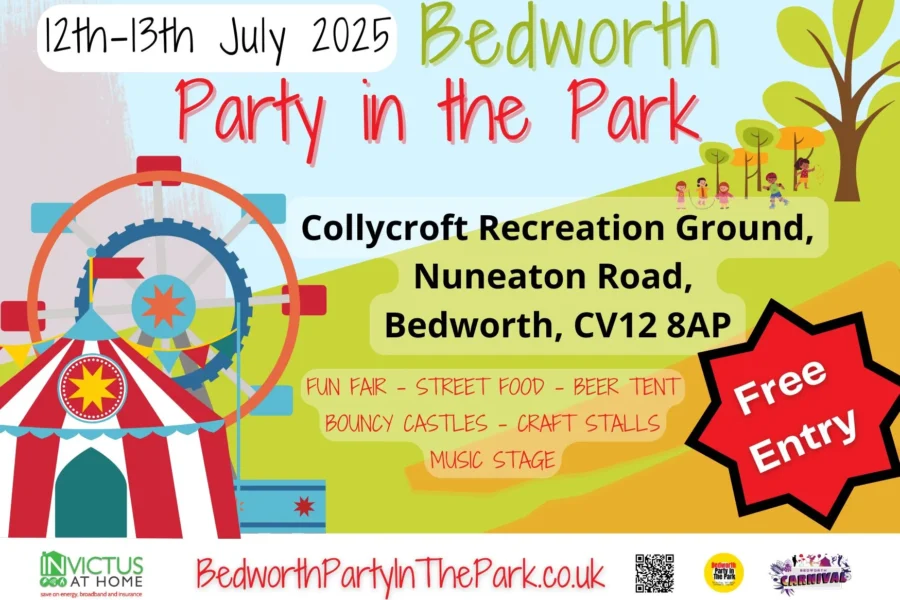
Bedworth Party in the Park
A free community festival in Bedworth that brings together families, performers, traders, charities and volunteers — and a project Invictus has supported over a number of years.
Read project story →Got a project we should know about?